 FLYSCOUT
Why did my flight turn back? Turnbacks and U-turns explained
A flight turns back when the crew decides the safest or most sensible place to land is the airport it just left. The usual reasons are a technical problem, a passenger who needs a doctor, or trouble at the destination. Not every return is a problem, though: test and training flights are planned to end where they began.
A flight that turns back draws attention, because a track that loops back on itself looks dramatic on a flight tracker. Most turnbacks are cautious decisions: the crew has a reason not to continue, and the airport they left is the best place to sort it out.
What a turnback is
A turnback, or return, is a flight that lands back at the airport it took off from. It can happen minutes after take-off, or hours later over an ocean. A flight that lands somewhere else instead is a diversion: see why do flights divert.
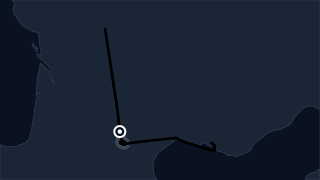
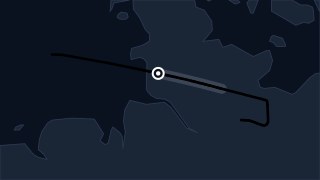
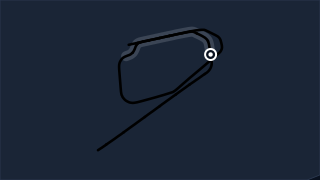
On a flight tracker, a turnback in cruise looks like a U-turn: the aircraft reverses its course and flies back the way it came. Earlier in the flight, it is often a wider loop, sometimes with a few circles before landing.
Why flights turn back
SKYbrary, the aviation safety library backed by EUROCONTROL, says the most common reason for an air turnback is a problem during or soon after take-off, most often with an engine. But a turnback can happen at any stage of a flight, even near the destination because of weather. The usual reasons:
- A technical problem. An engine indication, a fault with pressurisation, a bird strike on departure, a warning light, or a door or panel the crew wants checked. Many such faults leave the aircraft perfectly flyable, but the crew and the airline decide to land and let engineers look at it.
- A medical emergency. If a passenger falls seriously ill soon after take-off, the departure airport may be the nearest good place to land.
- Trouble ahead. The destination is closed by weather or an incident, or the airspace on the route has been closed.
- Something on board. A disruptive passenger, or a problem in the cabin such as smoke or a smell that needs checking.
Why the departure airport rather than the nearest one? Early in a flight it is often the nearest anyway. It is also often where the airline has engineers, spare parts, a spare aircraft and staff to rebook passengers.
Why some aircraft circle before landing back
An airliner takes off heavier than it is allowed to land, mostly because of the fuel for the trip. Coming back soon after departure, it may be over its maximum landing weight. The crew then has three choices:
- Burn fuel off by holding or flying a long loop until the aircraft is light enough.
- Dump fuel in flight, if the aircraft has a jettison system. Most airliners do not: the Boeing 747 and 777 do, some 767s do, and the A320 family, the Boeing 737 and 757 and regional jets do not. Port of Seattle found that only about 4% of its departures in 2019 could jettison fuel. Fuel dumped above 5,000 to 6,000 ft generally evaporates before it reaches the ground, Boeing says, and air traffic control warns other aircraft while it happens.
- Land overweight, when landing quickly matters more: a serious fault, or a passenger who needs hospital care. The aircraft must then be inspected. Boeing notes that both overweight landings and fuel jettison are considered safe.
That is why a turnback track often shows a few laps of a hold, or a long loop, before the final approach.
What a turnback looks like on a flight tracker
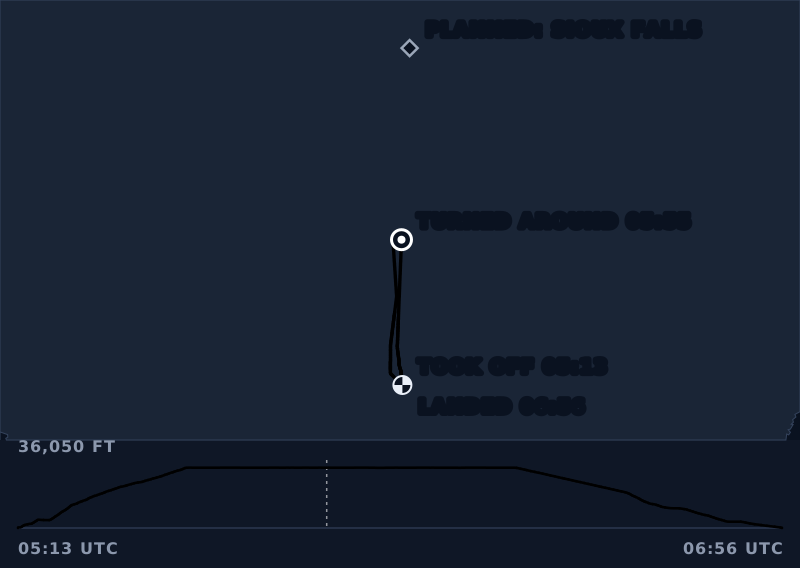
FlyScout has two rules for this. Turned around catches the U-turn while it happens: an airline flight planned to fly somewhere else, above 20,000 ft, at least 100 NM from where it took off, that turns through 150 degrees or more and keeps going on its new course, or through 120 degrees if the new course points straight back at the airport it left. Returned catches the landing: an airliner, freighter or business jet planned to fly somewhere else that comes back to the airport it left after at least 15 minutes in the air and 25 NM away. The flight in the example triggered both, and its page tells them in order: the turn near Wichita, then the landing at Dallas Fort Worth.
As always, FlyScout says what the flight did and never why. A track shows the turn, the height and the landing, not the reason, which only the crew and the airline know.
Not every return is a problem
Some flights are meant to come back. On its first full day of watching the world around the clock, from 15 to 16 October 2026, FlyScout found 31 flights that landed back where they took off. Ten were flown by the manufacturers themselves: nine Airbus aircraft from its airfields at Toulouse and Hamburg-Finkenwerder, and a Boeing 777-9 from Boeing Field in Seattle. Twelve were airline flights. The rest were business jets, a research aircraft and a firefighting aircraft.
That is why the U-turn rule, Turned around, only judges flights on airline callsigns, at cruise height and well away from their departure airport: a test or positioning flight turns round by plan. Since 16 October 2026, both rules also need the flight's planned route, from a public list of airline routes, to say it was going somewhere else, which leaves out the manufacturers' test flights and the training and survey flights that come home by plan.
Questions people ask
Why do planes turn back to the airport they left?
Usually because of a technical problem, a medical emergency on board, or a problem at the destination such as weather or a closed airport. Going back to the departure airport is often the sensible choice, because the airline has engineers, spare aircraft and staff there to look after passengers.
Why did my plane circle before returning?
Often to wait for a slot, or to get lighter. An airliner that has just taken off can be heavier than it is allowed to land, so the crew may fly in circles to burn fuel. Larger aircraft can also dump fuel instead; most smaller ones cannot.
Is a turnback an emergency?
Not necessarily. Many are precautionary, decided calmly by the crew and the airline. If it is an emergency, the crew tells air traffic control, gets priority, and may set the transponder code 7700, which flight trackers show.
What is a U-turn on a flight tracker?
A track that reverses direction, often far into the flight. It is the first sign of a return or a diversion, visible before the aircraft lands. FlyScout calls it "Turned around" and later notes where the flight landed.
Sources
- SKYbrary: Air turnback
- Boeing AERO: Overweight landing? Fuel jettison? (2007)
- eCFR: 14 CFR 25.1001, Fuel jettisoning system
- Port of Seattle: Fuel jettison briefing (April 2022)
- SKYbrary: Fuel dumping, guidance for controllers
- FAA: Aeronautical Information Manual, chapter 6, section 3 (distress and urgency procedures)